If you read our blog last month about getting your boiler service done in the summer, you are well ahead. Assuming you got it serviced last month, you should be good to go. But it’s still good to test your heating before you need it, in case you have any radiator or leak issues you weren’t aware of, or if you didn’t get your boiler serviced over the summer. Last year we didn’t follow our own advice for the first time ever, and then had a problem with the thermostat connecting, coinciding with being sick and not being able to trouble-shoot it. So we really do recommend checking that your heating works before you need it! And if it doesn’t you now have plenty of time to sort it out.
When someone passes away it can be a very traumatic time for family and friends, even if the death was expected, and dealing with a loved one’s possessions can be a very emotional task. Once any items in the will have been distributed, you can ask other family and friends if there is anything they want. If there are more valuable items in the property they may fall into the estate to be valued, and so it is important that you follow the solicitors’ instructions for disposing of or sharing out those items. Once that is done you may still be able to sell items, and so we recommend contacting auction houses and / or antique dealers who you know and trust, to help get you the best price. After that we recommend looking at things in the following order:
Other furniture to sell, either on Ebay, Gumtree or through Facebook groups or marketplace
Furniture to give to charity or give away. If a charity won’t take items you may be able to give them away using Olio, Gumtree or again, local Facebook groups or marketplace
Small items are best to go straight to charity, but not all shops take everything so check individually
Specialist items from hobbies may be of value to a collector even if they have no monetary value, so you might find someone online
Keep papers aside to be shredded if not needed for the legal process. Get a shredding company to collect, or you can drop off
Use a waste collector or skip at the end.
Or, if you want to save time, you can engage a house clearance firm to do all of the above for you.
Not everyone has friends and family nearby to help them in retirement. However, there are other resources available to help:
Age UK https://www.ageuk.org.uk/ is a UK-wide charity which has various support options available including footcare, shopping, handyman, driving, lunches and activity centres. All these services differ from area to area so check with your local Age UK office.
u3a https://www.u3a.org.uk/ gives you opportunities to develop your interests, make new friends and have fun with special interest groups; they differ area to area.
Your local areas will also have other specific community groups. Two such in Wandsworth are:
WOPF – https://www.wopf.org.uk/ who have speakers once a month and campaign for older people in the borough.
We run our very own community group, Café Connections, https://www.onestoporganisers.co.uk/cafe-connections/ online twice a month (so location is no barrier) with a speaker once a month and a discussion topic once a month.
Making the decision to go into a care home is never an easy decision. In-home care is a great alternative, but it doesn’t work for everyone. If you need to go into a care setting these are some things to look for when assessing the options:
Activities – if you love singing, but they don’t do this, will they add it? If you love art and can no longer get to exhibitions, do they do something to cater for this? Have a look at the breadth of activities and whether they suit you.
CQC rating – the Care Quality Commission is the independent regulator of health and social care in England. You should look for a good or outstanding rating.
Is it close to the people who will visit you the most? If those people travel by public transport, is it near a station or bus route?
Does it look and smell clean? Or is it rather utilitarian?
Does it seem like a place you could call home, or just somewhere for a temporary stay?
Are the staff friendly when you visit?
Do you have specific care or nursing needs, and can they meet those needs?
Can you afford it? Don’t forget to have a talk with a financial adviser or eldercare consultant to see if there is anything you haven’t thought of which would help you with the cost.
Ultimately, if you need help to decide where is best for you, then we can put you in touch with an eldercare consultant who can help.
Most of us do internet banking these days, but if we are older we may not have got into that, or we might distrust it and feel that it is too difficult to learn now. However, if you have set up internet banking it makes it easier to pay people and to check your balances. You can also move money around and review standing orders and direct debits more easily. It can of course make you more vulnerable to scams, but these can happen even when you just have a credit or debit card to hand. Banks are very helpful in advising their clients how to avoid scams, so speak to them if you can.
If you have a power of attorney set up, one of your attorneys can help with your banking and other financial affairs. Each bank will have their own way to set this up. However, lesser known is the ability to set up a 3rd party mandate which you can do with anyone, whatever your relationship is with them, as long as the correct forms are filled in and signed by each party. This means that you can both have
access to a bank account and make payments and check it on a regular basis. Each bank will again have their own way of doing this, but it is a good way of allowing your loved ones to help you.
It is a government benefit that helps with extra costs if you are over state pension age and need someone to help look after you.
It might be that you feel you don’t need financial support now, but it is a non-means tested benefit, and it might be something that you could be very pleased you have in the future if you need to pay for carers or a stair-lift, for example. Or it could be something you could use now to pay for taxis if you can no longer drive or get public transport, or if you need help with cleaning or meal preparation.
Most importantly, Attendance Allowance helps you remain independent for as long as possible. Our friends at Grey Matters Consultancy are experts in claiming this. Why not head over to their website and find out more, or we can put you in touch with them.
The inevitable will happen to all of us and it’s good to get planning and talking about it before we go. The inevitable might be that your attorneys need to act for you or help you during your lifetime or it might be information for your executors when you die. There are some great resources available and we wanted to let you know of the ones we like:
For attorneys and executors
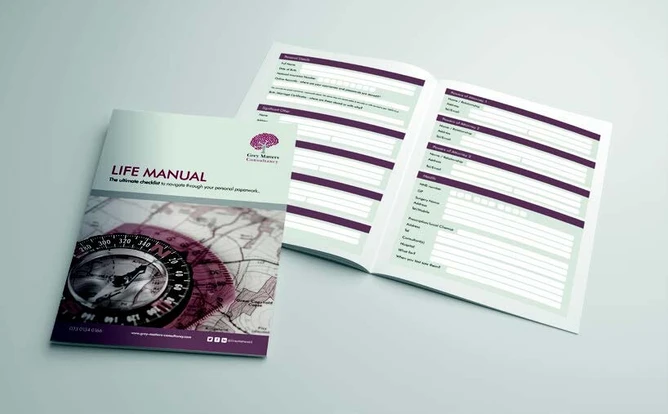
Peace of Mind Planner – a comprehensive workbook to fill in containing details that anyone dealing with your estate would like to know about https://amzn.eu/d/8NaEsOY
If you are a client of St James’s Place Partnership they also have a similar manual which you can fill in.
For executors and useful in advance to start planning
White Balloon https://www.whiteballoon.co.uk/ a resource for life’s end from funeral directors to florists, counsellors and musicians and much more.
Using the information from the life manuals above, you can close, freeze or transfer all of your loved one’s accounts from one place, for free. You can also set it up in advance. https://lifeledger.com/
Planning doesn’t have to be sad or morbid, it ensures that you make life easier for your loved ones and that your wishes are respected when you are gone.
So, you’ve decided that the best thing for your loved one (or you) is to get some help with care at home. It could be help with meals, or with personal care, cleaning or companionship, or a mixture of all of these things. If you have more than £23,250 in savings you have to pay for the care yourself.*
We’ve noticed that lots of people seem to think that those providing care at home are expensive, intimating that the extra costs involved rather than privately paying a carer, aren’t worth the money. Here are some things we think are worth thinking about when considering the options:
Employing someone privately means you are responsible for sick pay, holiday pay and finding cover when they’re not there, as well as finding the right person in the first place through adverts and interviews, and then getting employment contracts set up. You might need to find cover at short notice when it isn’t practical to do so. The carer should also set up a care plan for your loved one (or you) but the practicalities of the time they have might mean this falls by the wayside. In short, you might be lucky, but the legal, financial and practical responsibilities can be onerous.
Using a care agency means that you have a management point of contact to sort all sorts of queries and concerns that you may have. They are responsible for training staff and ensuring all legal protocols are covered for compliance and best practice. They will make sure a care plan is in place and regularly reviewed. They also have insurance and will provide any cover for holidays and sickness and ensure their carers are paid. They can inform you of changes to legalities relevant to your situation. They also often put on seminars for family members, such as dementia awareness sessions and other relevant information.
If you are not sure if care at home is the right thing for you, then we can put you in touch with https://eldercareconsultant.co.uk/. We can also help you with agency recommendations in your area.
HMRC should send you a PAYE coding notice each year, unless they believe that a source of PAYE income is not chargeable to tax, or if you do not have a liability to tax on any PAYE-source income. Being retired doesn’t stop you from being liable for tax or from receiving a tax code.
If you usually get one and don’t have one yet this year then you should get in touch with HMRC to find out what happened to it.
If you usually get a tax code notice you should check it when you receive it to make sure it is correct! If you need help in understanding it this is a great link to help you and a great website in general for help regarding tax issues for older people. https://taxvol.org.uk/index.php/your-tax-code-notice-pensions/
We can recommend accountants and tax specialists to help you with your tax affairs if you have questions or need a tax return done on your behalf.
Last week we talked about the importance of powers of attorney. So if you have decided you want to make them, you need to think about who might be the best attorneys for you*. Some of the following might help you to decide:
They don’t have to be your relatives or your children. Even if you have relatives and adult children, it’s your decision as to who should be your attorneys.
These are not permanent decisions; you can replace your attorneys later. You can either put replacement options in the original forms, or you can redo the forms later. If you redo them it will attract another fee by your solicitor and the Office of the Public Guardian where they get registered, but if, like me, your attorneys are all older than you, you will know that at some point you may need to change it.
You don’t have to have the same attorneys for both health and welfare and finance. You can have different ones.
The attorneys don’t have to act together (or they can) so you can decide how to structure this depending on how you think your attorneys will get on with each other.
You can pay your attorneys to do the job, and so you can pick people who are professional attorneys. Solicitors will often take on the finance side of being an attorney. At One Stop Organisers we can also do this in some cases for people who are already our clients and who we have worked with before.
If we can help with suggesting solicitors to help you or your older relatives with the forms, do get in touch.
*A power of attorney gives one person legal power to act for another person and the person acting is then called an attorney.