Tag: Lasting Power of Attorney

  • What’s in your relative’s fridge

    What’s in your relative’s fridge

    We started our weekly short blogs a year ago on December 21st  with a reminder to look out for your loved ones over this Christmas when you go to visit them.  And we thought it was worthwhile repeating the message.

    Whilst you are with your relatives and friends and having a lovely festive and relaxed time, they may not want to tell you about anything happening to them as they may feel too proud or embarrassed, or be in denial (or all three).    However, you may notice some changes to them and their home which are worth noting. 

    Keep an eye out for:

    • Are they using a stick when they haven’t before?
    • Are they holding onto walls or furniture to steady themselves?
    • Is their home less clean than it used to be?  Perhaps there are smells you didn’t notice before or a bit more dust?
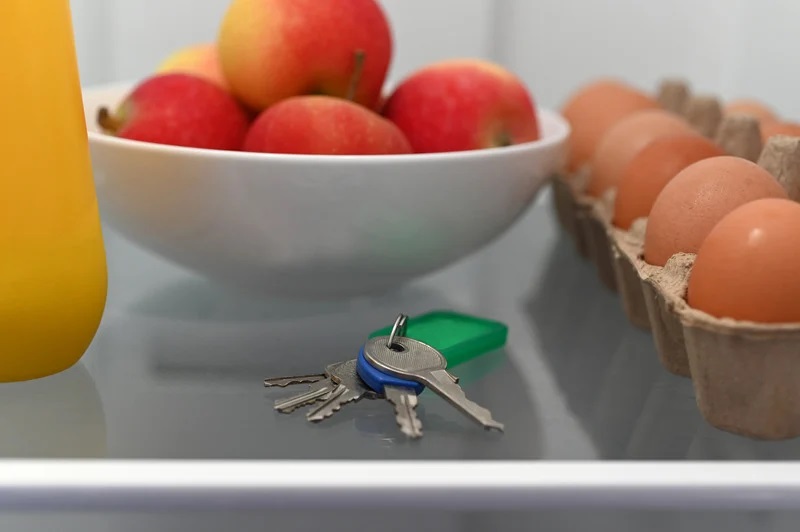
    • What’s in the fridge that shouldn’t be (things that don’t belong there or things that have gone off!)?
    • Are their normally organised papers in a mess?
    • Are they a bit forgetful?
    • And another thing to look out for is that they don’t want to invite you into their home whereas they did before.

     Just make a mental note of any of these things and stay tuned for next week’s advice on how to talk to them about these changes.  

  • Losing your landline?

    Losing your landline?

    Did you know that landlines are being phased out?  It’s not happening yet, and has in fact been delayed from 2025 to 2027.  The delay is because not all providers are ready and able to make the switch yet, and don’t all have plans in place to help vulnerable customers. 

    The landline as you know it, will be phased out and you will need to be using VOIP (voice over internet protocol) technology, instead.  These rely on electricity and broadband and so there is much discussion about back-up battery especially for vulnerable customers.   Of course many people have mobiles and can use these in an emergency (if they are charged up) but not all customers do.

    We are pleased to note, however, that the personal care alarm companies have adapted their technologies and now use the mobile networks to route their emergency calls, so they aren’t reliant on the landline network anymore.  Existing clients using the old technology will be migrated over in due course.

    Our concern is that we see a lot of people with poor speed broadband (even in cities like London), who can’t possibly expect to be able to make calls over the internet.  We hope there is time for all of this to be upgraded.

    If you haven’t been contacted about your landline being switched, then don’t worry, you are probably best to wait until you have to do it. 

    Eventually, after all the upgrades, the digital network will be cheaper to run, so hopefully it will be worth it in the end.

    If you are concerned about the new technology, please get in touch and we will help you if you need to change your technology.

  • Energy – confusing?

    Energy – confusing?

    Do you find your energy bills confusing?  You are not alone.    There is far too much jargon involved so we thought we would explain a few things that might help simplify things.

    Fixed price v variable tariffs

    Deciding whether to go for a  fixed or variable is like betting on the horses and taking out insurance at the same time.  It’s a gamble, but it gives you peace of mind.   The variable may go up or down in the time you are in the contract but with a fixed tariff you know the standing charge and unit rates you are paying.  Don’t forget it doesn’t fix the exact amount you pay, it fixes those unit prices and the standing charge.  No one can predict exactly how much energy you will use in the year, even you!

     Paying for your energy in equal monthly payments v paying for what you use

    Most people choose to pay their estimated annual usage in 12 equal monthly instalments.  This means you pay the same every month.  If you use more energy in those 12 months, your monthly price will go up the following year to reflect the extra usage and to pay off the previous year’s deficit.  If you use less then your energy company will give it back to you.  UW automatically put any credit balance in their customers’ accounts in the 13th month, but most other companies want you to ask them for it and we’ve heard stories of people having to ask multiple times.   However, if you would prefer your energy company not to have your money up front, then opt to pay for what you use each month.  You may need to commit to a smart meter depending on the energy company, but you will definitely need to read your meter at the end of every month for it to be accurate.

    Price cap

    This is set by Ofgem, the energy regulator, and it only affects customers on the variable tariffs and is to protect them from paying astronomical prices if they don’t switch.  The price cap is not a limit on your total bill. It restricts the price per unit (or kWh) and standing charge that energy companies can charge you.  When you hear in the media about an annual cost for the price cap (£X per year) this is based on an average usage.  And none of us are average, so your actual cost may be lower or higher. 

    Comparing energy costs

    If you decide to look at switching, remember to look at the annual cost rather than the pence per kilowatt hour.  This is because the annual cost includes the standing charge which is another variable.

    There isn’t a lot of difference between energy companies’ prices these days, but there is a big difference in the extra perks you can get such as other money-saving or environmental initiatives and of course their customer service.  So ask your friends who they use.

    If you want help looking at your energy bills, we can help.

  • Christmas made easy – part 1

    Christmas made easy – part 1

    This is a repost of our blog in November 2022, because we think it’s worth repeating.  Part 2 will be next week.

    It’s all about making lists.  So get a pen and paper ready, or a note section on your mobile phone and make some lists.

    1. Make a list of all of those presents you want to buy, and who for.  If you haven’t started ordering yet, we recommend doing so right away!  Leaving anything to the last minute is always stressful.  Mark off when you have bought something, and if you need to go to a shop, put a diary note to go to the exact shop, or to go on a browsing trip,  so it doesn’t get forgotten.
    2. Once you’ve ordered a present online, make a note of where you ordered it from, how they are sending it, and when you expect it to arrive.  Also keep a folder in your emails for all of the email order confirmations.   Then you can follow up if it doesn’t arrive when you’re expecting it to.
    3. Check last posting dates https://www.royalmail.com/christmas/last-posting-dates to make sure you won’t miss it if you are sending internationally.
    4. Make a time to wrap presents and write cards.  Again, put this in your diary.  Put Post-its on the front of envelopes of any cards of people you are going to see in person, with the date you’ll see them and put them in order by the front door, so you can take them with you when you are seeing them.
    5. Do the same with presents, so you can save on postage.
    6. If you need to post presents, try to go to the post office first thing in the morning and not on a Saturday, to avoid lengthy queues.

    We help our clients buy, wrap and post presents and cards.  Don’t leave it to the last minute, get in touch if you would like help.

  • What is a superconnector, and why do you need one?

    What is a superconnector, and why do you need one?

    A super-connector is someone who knows the right people to help you, when you need help.  These are people who have access to a wide network of people to call on to assist where necessary.  Super-connectors are people that when you say ‘X happened to me today and I think I need to do Y’, they know just the right person to put you in touch with. As you get older there are many different people and professions out there who can help you, but the great news is you only need one as they can usually refer you to others.  Examples of super-connectors are:

    • Healthcare professionals
    • Financial adviser
    • Private client lawyer / will writer
    • Estate agent
    • Care agency
    • Social care consultant
    • Someone like us!

    But just because someone is one of those professions, it doesn’t make them a super-connector.   Super-connectors are generally helpful people who go out of their way to help others.  If you’re reading this you already know a super-connector – us!   So reach out if you need anything and we’ll connect you to the correct person!

  • Retirement Villages

    Retirement Villages

    Choosing to live in a retirement village / assisted living can be a fantastic solution for many older people who are looking to downsize, but it’s not right for everyone.  Here are some of the benefits:

    1. Community and Social Interaction:  If you live far from friends and family, there are built in social networks and plenty of other people ‘in the same boat’.  Regular social activities and clubs help build the sense of community.

    2. Safety and Security: Enhanced security measures such as gated entrances, 24-hour security personnel, and surveillance systems, making it a safe living option. Many villages also offer emergency response systems and medical staff on call, providing peace of mind for both residents and their families.

    3. Maintenance-Free Living: Maintaining a home can become physically demanding and stressful.  If you buy within a retirement complex they will usually have a handyman on site, and if you choose to rent, you have even fewer worries about any repairs that are needed.

    4. Financial Predictability: Although there is a wide range in the cost of retirement village options, there should not be any unforeseen costs as residents often pay a monthly fee that covers maintenance, amenities, and sometimes even utilities.

    5. Freedom and Independence:  Contrary to the misconception that retirement villages limit freedom, they are designed to promote independence. Residents can maintain their own schedules, come and go as they please, and continue engaging in activities outside of the village. At the same time, they benefit from having support and care available when needed. This balance between independence and assistance makes retirement village life appealing to those who want to maintain control over their day-to-day activities while having access to help.

    So if you are looking to simplify your life and live in a community-focused, maintenance-free environment, choosing a retirement village can offer an improved quality of life as you get older.

    If you need help with downsizing, we can help.

  • It’s not too late to start using Zoom!

    It’s not too late to start using Zoom!

    Remember those heady days before the pandemic?  The days when hardly anyone was using Zoom.  I admit, I had the app, and had done some meetings, but I didn’t really know what it was capable of.  Now that the pandemic has passed, I spend a lot less time on Zoom and it’s transformed the way a lot of businesses run.

    Does it still have a place in the lives of those who aren’t working?   It can be very useful to have meetings with a travel agent, a will writer, a financial adviser, etc.  It can also be helpful to have family catch-ups (as in the picture!) and see friends on the other side of the world.  One of my clients still has a weekly Zoom with her sisters; connections have been revolutionised by what happened in the pandemic.

    There are also many groups for those in later life that meet online, from social groups, to classes, and bridge groups.  It is all out there.  So if you don’t fancy going out into the world, but crave connection, Zoom is very much still a worthwhile thing (and of course other platforms like Microsoft Teams, or Google Meet).

    If you want to get started on Zoom or another video platform, talk to us about how we can help you get set up.

  • Get ready for winter

    Get ready for winter

    As we head into autumn it is important to get yourself ready for the winter and make sure you are ready for the arrival of any cold snap:

    1. Check your heating works (which we first advised in August).
    2. Make sure you have lots of thin layers that you can wear on top of each other.   You can also get an ‘Oodie’ which is a giant over-blanket that you can wear to keep you warm inside your home.
    3. Get a really warm hat, scarf and gloves.  If your heating breaks down you can always wear these inside.
    4. Drink lots of hot drinks, and have soups and stews for lunch and dinner.
    5. If you are tempted to use a hot water bottle, be sure to check it for holes as they can perish over time and you don’t want boiling water leaking on you.   They have a daisy on them to determine when it was made.  The inside number is the year and the outer segments represent the month.  If you’ve had it for more than three years you should consider replacing it.
    6. If you are mobile, keep moving, as that always keeps you warmer.
    7. Some Age UK offices run a Warm Homes programme.  See if there is one in your area here
    8. If you are on the Priority Services Register (for those over 60, those with young children and those with disabilities) and you have no heating due to a power cut or gas emergency, they can help you remain warm and able to cook with temporary appliances.  Find out more here.  
    9. Don’t suffer from the cold; contact your energy company or social services for more help.
  • Be part of a community

    Be part of a community

    So you’ve retired!  Many people look forward to this so that they can spend time with their grandchildren, go on holiday, visit art galleries and enjoy more of their hobbies.

    For others, the thought of giving up work is stressful and they worry about the lack of interaction with others and how to spend their time. 

    Of course it’s a good idea to have a rest and some relaxing time immediately after retiring, but if you don’t have a purpose or specific things to do, your health, both mental and physical, will suffer.

    It’s really important to have a purpose, be part of a community and have a schedule.   Some people get a dog as it means they have to get up and walk it!  That gives them a purpose and a schedule.  Others volunteer for charities or at schools, giving them purpose, community and a schedule.   You’ll find many local groups for retired people and some even start for the over 50s.   You could begin a hobby that you have always been meaning to do.

    If you fancy joining our online group for those retired, from 10am on the 2nd and 4th Thursdays of the month, get in touch and we’ll book you in!

    Or meanwhile, have a read of our piece about community written for AfterCloud, here

  • Get that ‘back to school’ vibe

    Get that ‘back to school’ vibe

    September is a time for new beginnings, just like January, as it has the back-to-school vibe that is inescapable even if you don’t have children or grandchildren in the education system.   It’s a time to start on things you have been putting off and generally just get going on your own home projects.

    So, if you would like to start decluttering, now is a good time!  If you are looking at it and wondering where to start then we recommend the following:

    1. Start small, one cupboard or corner at a time
    2. Schedule the decluttering into your diary
    3. Put on a rousing music track to keep you moving and stop you getting distracted
    4. Do it with a friend (you can help each other) or tell a friend you are doing it, to remain accountable
    5. Always remove items from your home for the waste or charity when you’re done, so you can see the results quickly.

     If you’d like a bespoke declutter plan, or you need some professional help, get in touch with us, we can help.