Category: Post

  • Letting things go

    Letting things go

    Some people find the act of decluttering simple, and some find it very difficult.  It can be a bit like baring your soul to a counsellor – difficult at first, but rewarding as you spend more time doing it, and something that will open you up to new possibilities at home and in your life as you let go of your ‘stuff’. 

    When we are decluttering with clients, we find that we are operating in a similar role to that of a counsellor.  We hear  so much about clients’ memories, both good and bad, and about their families and their families’ experiences.  It can really help to talk about these things to help process memories and allow items to be given away and rehomed.    Memories can be fun, or they can be a reminder of painful times, and sometimes talking about those difficult memories are the most important in helping you let go of items. 

    If the idea of talking to someone about your life or getting them to help you in your home seems tricky, then one easy way to start decluttering, is to implement the ‘one in one out’ policy.  If you buy a book, give away a book you already own. If you buy a new dress, give away a dress you own.  If someone gives you a candle, give away (or quickly use!) a candle.  If they give you a mug, give away a mug.   People don’t know that you’ve given away something they gave you.  If it gave you pleasure when you received it, it’s done its work and you can let it give someone else pleasure now. 

    To help other people minimise their clutter, when you give presents, give people experiences (theatre, a meal out, a cinema ticket) or things that are consumable (food, drink, flowers).  There are many subscriptions you can get for  consumable gifts. 

    If you need help to make a start, either by having a declutter plan or having someone be with you, do get in touch and we can book in an exploratory call.


  • Transitioning to domiciliary care

    Transitioning to domiciliary care

    If you are looking at getting help from a domiciliary carer for your loved one, there are some practical things to think about once you know you will be using their service: 

    1. Declutter the rooms they will need to be in.  This is important because your loved one’s home is the carer’s work place and it needs to be safe for them too.  Extra equipment in the home may well be needed so there should be space for this, and for the carer and your loved one to be able to move around as a pair.
    2. Ensure all of your loved one’s post, filing and general paperwork are up to date.   Then, when new items arrive,  they will be easy to fileand keep on top of.  If everything is already out of order, it takes  longer to deal with and to find things when you need them.
    3. Write simple instructions for the washing machine and how / when your loved one wants clothes and bedding washed.  Not everyone is the same, so these things vary.
    4. Write simple instructions for what to throw away from the fridge.  We  know that sometimes things are discarded too soon, and other times left for too long, so it can be good to have instructions. 
    5. Write instructions on how your loved one likes tea / coffee / certain meals – the carers  may not always be the same ones due to holiday or sickness, so although most agencies will try to send the same person, this helps towards a seamless handover.
    6. Write instructions for the dishwasher.  Not everyone has one or knows how to use it. They could wash up instead so you can suggest that if you think it’s easier.
    7. Let the carers know what day the bin collection is and what things can be recycled or not.  This varies from borough to borough, and can differ in blocks of flats, so this information makes it easier for everyone. 
    8. Let the carers know if they should answer the phone or not, and what you would like them to say if  your loved one cannot speak (either indisposed or doesn’t have capacity). 
    9. Make a note if there’s anything else you would like them to do.  It could be to charge the iPad once a week, or to make sure certain lights are left on.  They won’t know if you don’t tell them.
    10. Make sure you have enough toiletries for your loved one, or set up deliveries so they can’t run out.

    Hopefully the above practical suggestions will help the transition go smoothly.

  • January Round Up

    January Round Up

    Hello and welcome to 2025! We hope that the year has started healthy and happy for you.

    Christmas is often a time for thinking about the last 12 months and discussing future plans with family, so whatever you’ve been thinking about, we hope you are starting to bring those plans to fruition.  But we’re now looking forward to the weather getting warmer as the afternoons are getting just a little bit lighter!

    Later life planning 

    This coming Thursday, 30 January, we will be on hand at Avery Wandsworth Common (94 Northside, London SW18 2QU)  from 11am – 4pm for their open day.  Come and have a look round, or just pop in and have a chat to Ashley about later life planning.  We can help point you in the direction of lots of relevant professionals if we don’t know the answer.  No need to book, but you can contact Avery on  020 3751 1764.

    We have been busy with talks as we also went to Kyn in Hurlingham this week for a later life planning talk with https://www.peacock-law.co.uk/ and https://eldercareconsultant.co.uk/ .  It is always good to be able to meet people and help give them advice to make their later life plans easier and better. 

    Permission to blame!

    When I first meet clients who are downsizing, they are obviously apprehensive about decluttering and how it will feel working with someone who is, at that point, a stranger.

    One of the things I always say at the start of working with a client is ‘don’t worry, you can hate me during this process’.  Because I know they need to be able to direct their stress and anger somewhere.  

    Clients always laugh at this and it does normally help make the situation easier and breaks the ice.  I also give them permission to blame me during the process.  And I do that because I know I am not to blame!

    For instance, when a client needs to part with items that were given to them as presents, they feel guilty and bad about it.  Most people do understand downsizing and do understand that not everyone can hold on to everything and I’m sure (with the odd exception) would be totally understanding.  

    So I say, ‘oh, just blame me, you can say I made you’.  The truth is, I don’t actually ever ‘make’ anyone do anything.  I might ‘strongly suggest’ things that I feel are in their best interest, but I wouldn’t ever ‘make’ them.

    The person who gifted something in the first place did so with love, and you enjoyed the gift and appreciated it over a period of time.  And then you can part with it.  

    Unnecessary things you want to keep

    This article on a news site did make me laugh, about the different things that ‘baby boomers’ don’t want to get rid of.  Most of the list comes up with clients on a regular basis and these things in particular really resonated: 

    1. Stacks of greetings cards
    2. ‘Potential’ antiques
    3. Mysterious garage tools 
    4. Outdated cookbooks
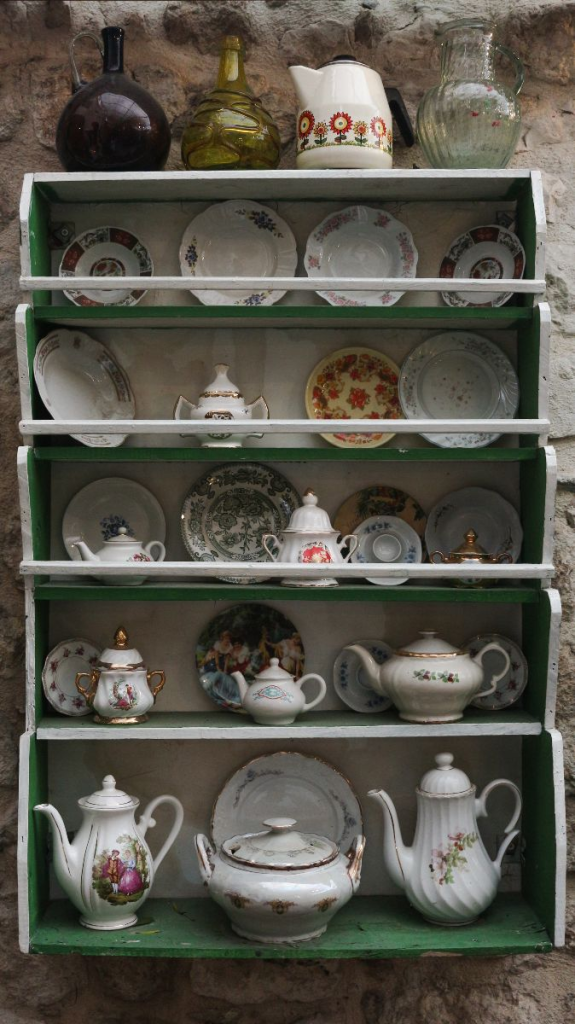
    5. Cupboards of unused china
    6. Instruction manuals for everything you’ve ever owned
    7. Obsolete electronics which ‘might be useful’
    8. The plastic bag stash
    9. Coffee mugs from decades ago

    We can help you if you are finding these or other categories difficult! Just get in touch.

    Here are the blogs we’ve written since the last round up:

  • Relationship breakdowns

    Relationship breakdowns

    We are starting a series of guest blogs, once a month and our first one is written by Sapphira Gold who is an Associate Solicitor at Hanne & Co and she specialises in private family law.

    “As family solicitors, we often find that January brings with it a raft of enquiries about relationship breakdowns. After a busy festive period when family tensions may have arisen, this can lead to questions about what to do if those difficulties or differences can no longer be overcome and one or both feel that the marriage has sadly broken down. This article sets out some useful preliminary information if you are considering the implications and process upon separating.

    Preliminary steps

    Making the decision to end a marriage can be very stressful. It is important to have the right people around you, take time to make the decision and if you are unsure consider whether you can talk to your spouse about the issues in the marriage or consider seeking counselling. It may also be useful to discuss the decision with friends and family.

    If you think the marriage is breaking down and/or you are certain this is the right decision for you and your family, seeking early specialist legal advice is always advisable so you are aware of the implications and process from the outset.

    If you are married

    The only way to legally end a marriage is via a divorce. For the last few years, the system in England and Wales has moved to a ’no-fault’ system, whereby there is no need to prove why the marriage has broken down in order to divorce, but merely to confirm to the court that the relationship has irretrievably broken down. It is possible to apply for divorce either as a sole application or jointly with your spouse. There can be pros and cons to both depending on your circumstances and this is something to carefully consider with your solicitor prior to applying for divorce.

    Obtaining a divorce does not sever the financial ties between you. The only way to sever financial ties is via an order of the court and this runs separately but parallel to the divorce proceedings. This need not result in attended court hearings and many couples agree terms between them which are ultimately contained in an order agreed by consent. The terms can be reached through direct or solicitor negotiations or through various out of court resolution methods. It is prudent to obtain  early advice from a family law specialist about your financial circumstances, as well as the process.

    If you do not wish to divorce but you want to separate it is possible to obtain a judicial separation, which is a formal separation but you would remain married. It is also possible to agree a separation agreement. If you are separated rather than divorced, you will remain financially tied to each other and it is important to discuss the implications of this with your solicitor.

    If you are not married

    Cohabiting couples who are not married are not protected by the same law as those in marriages or civil partnerships. In these circumstances financial division will likely be decided under laws relating to property and/or trusts. If your relationship has broken down, it is advisable to seek specialist family law advice at the earliest opportunity, so you have a better understanding of your options.”

    If you have any questions regarding a relationship breakdown or any other aspect of family law, please do not hesitate to contact Sapphira: sapphira.gold@hanne.co.uk or 020 7228 0017.

  • What if the charity shop doesn’t want your unwanted items?

    What if the charity shop doesn’t want your unwanted items?

    When decluttering, which you might be doing as a new year’s resolution, we recommend that clients give unwanted items to charity (if they can’t easily be sold).  Doing so:

    1. Helps someone buy the item cheaper than they would new
    2. Helps the charity get money to support the cause/s they were set up for
    3. Helps create space in your home more quickly (if you want to sell something it hangs around for a long while before you list it and then someone comes to buy it!)

    But not everything can be given to charity.   For instance, cuddly toys need a CE label (making sure they meet certain standards); not all charities take electrical goods; some things aren’t good enough quality (stop and think – would you buy it?!); and they can’t sell knives or alcohol.

    What do we do with the things that can’t be taken to a charity shop?  Here are some ideas:

    • Unopened alcohol – we donate for prizes for fairs either to charities or school PTAs
    • Knives – any place that makes food for charity would welcome good quality knives, so you can ask around and give to them
    • Unopened food with 3 months on the label can go to the local food bank
    • Unopened food which is less than 3 months on the label or out of date but not perishable can be listed somewhere like ‘Olio’.    You can give freezer food away this way too.    Opened food can also be listed but obviously you need to state this. 
    • Towels can be listed online as free items (Facebook, Olio or Freecycle are examples of places you can list things free)  as dog walkers often want them.    You can also list duvets and pillows there too (of course if they’re in exceptional condition, the charity shops may take them).
    • Furniture is often rejected by charity collection services and can be given away online as free items.  
    • Old saucepans may have life left but not be good enough for charity so you can list them. 
    • Cosmetics: new items in box sets can be given to charity shops, but smaller items can go to https://thehygienebank.com/ and https://www.toiletriesamnesty.org/directory/ 
    • Stationery, crafting supplies etc can be given away on Olio or you might have a community group nearby who will take these things https://www.workandplayscrapstore.org.uk/

    There are many more categories, but if in doubt, call your local charity shop first and if it is not suitable list it as a freebie on a local Facebook Group and try and give it a new home!

  • Brrr-it’s chilly

    Brrr-it’s chilly

    Have you ever had a broken-down boiler?  It could be caused by all sorts of things but one of the most common is a frozen condensate pipe.  And with the weather we’ve been having this is very likely.    But the good news is that you don’t actually need a boiler engineer to sort this out. 

    This helpful article from Worcester Bosch can help you identify your condensate pipe and thaw it out.   https://www.worcester-bosch.co.uk/heating-advice/frozen-condensate

    And if it’s not your condensate pipe, get in touch with a recommended boiler repair company to get yourself warm again as soon as possible.   No one wants to be without heating in this weather! 

    Don’t forget we know lots of qualified and helpful boiler engineers and other trades, so get in touch if you need a recommendation. 

  • New Year’s Resolutions

    New Year’s Resolutions

    Happy new year!  A time of new year’s resolutions for lots of people.   These are good in many ways as it is like setting goals – things you want to achieve or things to make you feel better.  Last year my new year’s resolution was always to eat dinner at the dinner table.  I think that lasted until September, so I did well as only 8% of new year’s resolutions are kept until the end of the year. I will try harder this year!  I also set a goal of hitting 5 million steps across the year (by doing approximately 14,000 steps per day).  I will let you know if I did this in the comments on Instagram and Facebook!

    As 80% of resolutions are already broken by the end of February you need to really want to make your resolution stick and form a new habit.

    One of the best ways of making your resolution stick is to do something called habit stacking – where you put the new thing onto something else you already do, which makes it easier to stick to.   We recommend James Clear’s Habit Stacking (available online or at all good bookshops!) which talks about this.   Examples of this could be wanting to lose weight and cleaning your teeth directly after dinner (making you less likely to eat more), or wanting to get more steps in, so walking round the block when you get out of your car at home before you go in.   You could also use a delayed gratification method and tell yourself you can’t have your coffee until you’ve done 20 minutes of walking.

    Another way of making new habits stick is to get an accountability buddy.  This works for walking, going to the gym etc.  We have also found that for many neurodiverse people, mirroring is a good way to get things done.  So if you continually put off your emails, or going to the dentist, agree to do your emails in the same room as a friend, or book an appointment for the dentist at the same time as someone else you know.

    If your new year’s resolution is to get tidy and declutter, but you haven’t started by February, let us know and we’ll come and help you!   And if your resolution is something else, let us know what it is! 

  • Christmas family reflections

    Christmas family reflections

    We hope you all had a fantastic Christmas day with your friends and family, or if you were alone, that you enjoyed the peace and quiet.  We know many people who prefer a quiet one, so if that’s you, we hope quiet was delightful.*  Some of you might still be doing lots of entertaining.

    You may have had a chance to reflect on anything different you noticed about your loved ones whilst visiting them.  You might be thinking about calling them to thank them for their hospitality, or if they weren’t hosting, calling them to make sure they got home ok, or to thank them for presents received.   You’ll find a good reason to check in.  Start on a positive note and then you can move on to mentioning whatever your concerns were.  You can ask if they’ve been to their GP recently, or perhaps you could suggest they might think about a cleaner so they can enjoy their time rather than thinking about chores.  Whatever it is, there will be a positive way to spin it and you’ll find it.   Offer suggestions if they are receptive, but otherwise just keep checking in if they’re not yet ready.

    If you have specific concerns or believe they need support you can’t give, do get in touch so we can help you work out the people who can point you in the right direction.

    *If a quiet Christmas was too much, there are many places that offer companionship and Christmas dinners on Christmas Day, and we can help you find one for next year if you would like.

  • What’s in your relative’s fridge

    What’s in your relative’s fridge

    We started our weekly short blogs a year ago on December 21st  with a reminder to look out for your loved ones over this Christmas when you go to visit them.  And we thought it was worthwhile repeating the message.

    Whilst you are with your relatives and friends and having a lovely festive and relaxed time, they may not want to tell you about anything happening to them as they may feel too proud or embarrassed, or be in denial (or all three).    However, you may notice some changes to them and their home which are worth noting. 

    Keep an eye out for:

    • Are they using a stick when they haven’t before?
    • Are they holding onto walls or furniture to steady themselves?
    • Is their home less clean than it used to be?  Perhaps there are smells you didn’t notice before or a bit more dust?
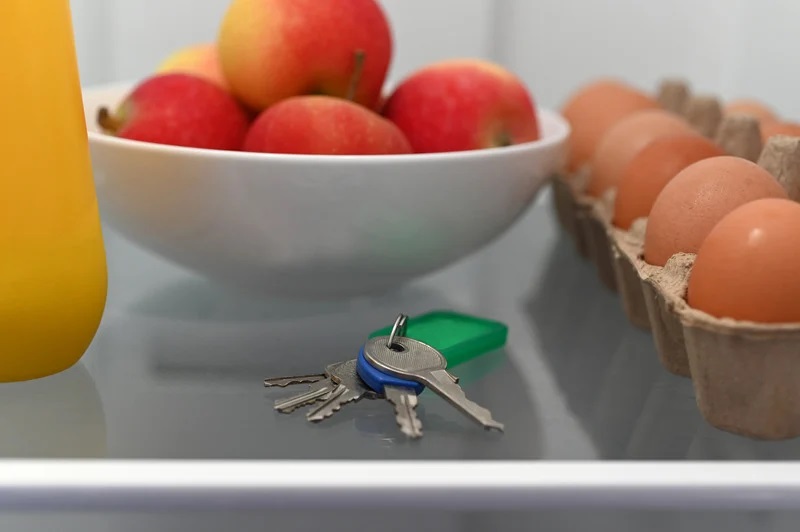
    • What’s in the fridge that shouldn’t be (things that don’t belong there or things that have gone off!)?
    • Are their normally organised papers in a mess?
    • Are they a bit forgetful?
    • And another thing to look out for is that they don’t want to invite you into their home whereas they did before.

     Just make a mental note of any of these things and stay tuned for next week’s advice on how to talk to them about these changes.  

  • Christmas shopping

    Christmas shopping

    If you’re not yet finished with your Christmas shopping, we’ve listed some websites below to help you.   

    If you want to help a charity, why not go with one of the big charities who sell new items online.  Have a look at these three as an example.  Or if you are looking for a secret santa why not pop into your local charity shop and get something bigger for your money? 

    https://giftshop.redcross.org.uk

    https://onlineshop.oxfam.org.uk/christmas-gifts

    https://giftshop.bhf.org.uk/giftshop/christmas-gifts

    For unusual and personalised gifts, we love www.etsy.com where you can find things for children, adults and pets!    You can type in ‘gifts for him’ for example and it will give you suggestions.  It’s very good! 

    You can’t beat a bookshop for a present and https://www.waterstones.com is an obvious one, but you can also buy from www.abebooks.co.uk  which amalgamates independent sellers.   They also have used books.

    Some of our tried and tested favourites are:

    www.Notonthehighstreet.com

    www.dontbuyherflowers.com

    www.findmeagift.co.uk  – Wind up sprouts anyone?!

    www.iwantoneofthose.com

    But don’t forget your local shops too, or those local to the person you are buying for.  Many will do delivery if you give them a call.  So definitely support independent shops where you can!