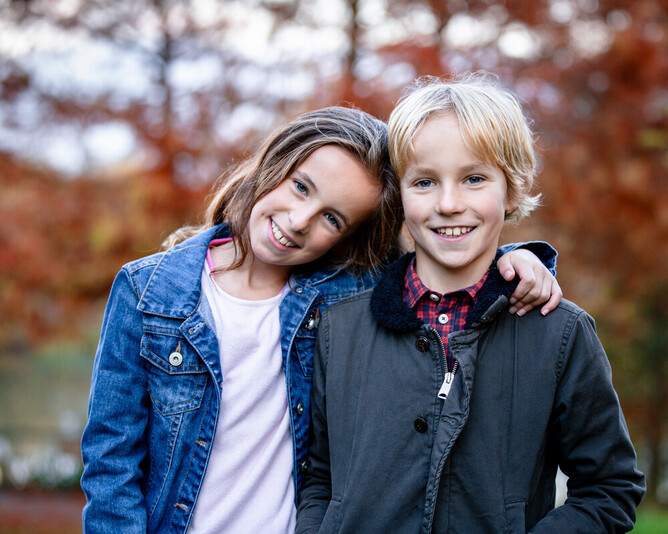
This month’s guest blog is written by Rosalind Furlong, a professional photographer, who captures people and memories for a living and shares here how she wishes she had dealt with her children’s memories.
My name is Rosalind and I am a hoarder. I’m not quite sure how it started. Perhaps it was being brought up by parents who lived through the deprivation of the second world war and who took the attitude that something might just come in useful someday. Maybe it was watching Blue Peter as a child and realising that an empty box or toilet roll tube might turn into some beautiful and functional object that would last a lifetime, if only I had some sticky-backed plastic. Or perhaps it was just a desire to hold onto things as I grew up, so that I could remember the past better.
If I hadn’t married and had children I think I would have been a prime candidate for ’Britain’s Worst Hoarder’ but as it is, all my clutter gets shoved into my study and friends always comment on how tidy my house is; the study door is firmly shut. Fortunately, my now-adult children have not inherited my hoarding tendencies, although I am aghast when they want to throw out what had once been treasures. However, as my husband so helpfully says, if you keep everything, you keep nothing. I have boxes of assorted memorabilia from my life but have not inspected them for years. They just sit, cluttering up the giant cupboard he gifted me to accommodate my hoard.
Some years ago when the children were little I realised I simply couldn’t manage to keep every last babygro, every little dress, every toy train. It became clear that it was not the object per se that I needed, but just the memory of the object, and so before any of their childhood possessions left the house for the great charity shop in the sky (OK, high street), I photographed them.
This obviously became its own chore – bags of clothes would sit for months before I summoned up the energy to go through them and photograph them. But this I did and now, nestled somewhere on assorted hard drives which house my professional photography, is a ton of photos of their clothes, their teddies and the rest of their toys. The photos aren’t artful – I didn’t have time for that. They are just a record. Incidentally, while I was typing that last sentence my husband came into my study and picked up a couple of badges I’d saved from a recent throw-out by the kids. ‘Why are you keeping this Team GB badge?’ he asked. ‘Why are you keeping the junior ranger badge?’ I don’t know, but perhaps they will become treasured possessions of our great-great-grandchildren. Although I suspect our kids will have chucked them out long before then. Anyway, back to the photos…
So there they are, sitting on the hard drives; someday, some day in the future when I have simply nothing else to do, when my endless to-do list is finally all done, I will go through the photos and make a book of each of my children’s possessions, and hopefully that will be the thing that their great-great-grandchildren will treasure.
Now, of course, I realise that this wasn’t the best way to record the objects – just a toy or a dress sitting on the ground. I should have taken more photographs of the children – of them in their clothes, of them playing with their toys, of them snuggled in their beds with their teddies. When children are little it’s hard to imagine a day when they won’t still be little. There’s always tomorrow to take the photos. Or the day after that. But suddenly they’re grown up and even I, a professional photographer, realise that I didn’t take nearly enough photos of them. Their toys and teddies and dresses are gone, their bedrooms are adult bedrooms, their childhood is over, packed away into the cupboards of our memories. Photos are all we have. Take photos. Lots of them. Not just of your children, but your partner, your parents, your friends, anyone you love. Anyone you might lose. Those photos will be your great-great-grandchildren’s treasured possessions. And if you don’t know how to take good photos, ask me and I’ll do it for you.
If you would like to find out how Rosalind can capture all your memories, you can find her at https://www.rosalindfurlong.com/ and 07786 512492.
When I was 10 years old, my parents got divorced. My dad, like many men, kept many screws, nuts, bolts, etc, ‘because they might be useful’. We moved to a more suitable home and I suggested to my mum that the shed-full of these items wasn’t needed – my father had moved abroad, so wasn’t going to take them himself. She insisted they came with us. 20 years later, she downsized, to a flat. No shed. How many times had those screws come in useful? Although I can’t tell you exactly, I’m pretty sure it was fewer than the number of fingers on one hand. And so out they went.
Everyone keeps things ‘because they might be useful’. But it is good to really think about how often that might actually be the case, or whether really, especially as you get older, you wouldn’t use so many DIY items; maybe you would be more likely to get someone in to do the work for you, who would bring their own tools, etc. It might be worth questioning your use of dinner services, tea sets and other items for entertaining. As you downsize you are less likely to have people round for dinner, and you are already at a point where you prefer others to do the catering for you.
If you need help deciding how many milk jugs and vases you should keep in your downsize, do get in touch with us and we’d be glad to help.
Claire Edwards, Registered Nurse and Eldercare Consultant, provides independent care advice to older people and their families. She gives us her thoughts here, having read a newspaper article from a family carer.
I recently read a letter to a national newspaper, written and sent by the wife and carer of a gentleman living with dementia. The full range of emotions expressed by her made me reflect on the fact that they are undoubtedly shared by so many spouses the length and breadth of the country – namely love, compassion, exhaustion, frustration, resentment, anger and guilt.
The writer is supported by visiting carers four times a day, has received counselling and been offered time out and considers herself to be better off than many people, but after 15 years she feels she is coping badly. She is as mindful of her daughter’s right to live the life she has created for herself as she is of her husband’s wish not to be cared for in a care home, and therein lie her feelings of despair.
The response her letter was given by the columnist was equally compelling. She describes humanity, goodness and selflessness, but also delivers a compassionate reminder of just how important it is to accept help offered by close relatives, for that close relative’s sake as well for the health and wellbeing of the care giver. She also points out that there often comes a time when 24-hour care provided by experienced and trained professionals is the right care option.
I couldn’t agree more. The message is clear – if you find yourself in this situation, do not be too quick to turn down additional support or close your eyes to alternative care options. You are, after all, only human and a promise made based on historic facts may well need to be revisited in the best interests of the person in need of care.
Claire invites anyone who finds themselves in this position and needs practical and emotional support to get in touch.
Did you know that your fire brigade isn’t just there to help you when there’s a fire or a road incident? They also help with fire prevention advice. Fire brigades offer a home visit to make sure you are safe in your home. Check with your local fire station to see what they offer. As well as tips on fire safety the visit may include fitting smoke or heat alarms, and they can also fit specialist alarms for those who are hard of hearing which include strobe lights and vibrating mats under your pillow.
Fire brigades also need to know if there is a hoarding issue in order to be able to respond appropriately in the case of an emergency and to protect neighbouring properties.
If you would like to know whether your home is as safe as it can be, you can use this online fire safety check, which takes you through your home room by room. Even if you think you are fire safe, it is worth going through it: https://www.safelincs.co.uk/hfsc/
Getting older can be a bit annoying. If you have osteoarthritis, you can lose your grip; if you have declining eye sight, you can’t see things as clearly; and your balance may have started to falter. So here are some easy things that might help you:
Get a small rubber mat or a plastic gripper tool to help you open jars and things. Often turning it is still hard but if you push a little to the right with the gripper and to the left with your other hand, it can become really easy.
Use a lazy susan in a cupboard so you can get to all your bottles and jars when it becomes harder to reach for things.
If you use shower gel in the shower but handling the bottle is tricky, get a pump action top. Or if you still like soap, put it in a thin sock, which will make it much easier to grip.
Shower caddies that hang over the taps or levers might save you from slipping if that stops you reaching for stuff. Even better, if balance is an issue do make sure you have grip handles installed and also a shower seat.
If you can’t always see remote control buttons then you can put a dot of nail varnish on the ones you want to use. In fact, nail varnish is great for marking keys too, so if you are always fumbling between two that look similar, use nail varnish on one of the keys.
Another thing that works for the remote control is to get someone to put masking tape over all the buttons you don’t use, and you can then see the ones you need much more easily.
Get rid of all your rugs – they are the worst trip hazard ever!
If you have an Alexa you can set medication and other reminders. If you don’t, you can use your smartphone. I’ve done these for years!
We hope you’ve found these useful, and if you need a hand with setting up any of the above, let us know, we can help.
I’ve found it necessary to rent an office twice during the 21 years of having my own business. On the first occasion I needed space for staff, and on the second my home just didn’t have room for a desk. However, much more of my work now is done at my clients’ homes, and my own home can now accommodate a desk.
Having an office at home, whether you work for yourself, are employed, or need a dedicated office space when you are retired, can become a dumping ground for papers and such like. I find I become unproductive if I have too much around me. It can be hard to keep on top of as I’m constantly bringing things back that I am sorting for other people, but it is totally worth being on top of it, for the ‘zen’ feeling it gives you.
The lovely people at Brother (who make printers and who have very good customer service I may add!) have come up with a list of five things to help you be more comfortable and productive, so have a read here:
Not heard of a digital will? A digital will is an inventory of your digital assets. It can form part of a normal will or be a side letter. It is really important to have a note of all the passwords that your loved ones will need to access documents you have created and online accounts you have; also for them to be able to use your social media to let people know you have died, and even to find the location of precious photos and documents that might be required.
You can create a document with passwords listed but this isn’t very secure. You could create it, password protect it and just give your lasting power of attorney/s and / or executors the password. Or you could print it out and tell them where you have hidden it. If you have a password locker then you can nominate someone who, in the event of an emergency or loss of life, will get access. For the one I use, they don’t have to have an account themselves at the point of nomination, but to get access they will need to have an account. This really is the most secure way of handing your passwords over to someone else.
To access your loved one’s social media you may very well need to have the password. Some social media accounts have a legacy option (like Facebook), but you need to nominate someone to be the legacy contact in order to do that. Instagram doesn’t have this option, but you can apply to memorialise or remove the account. LinkedIn works like Instagram in this way. So with the latter two, you can do this with a death certificate and don’t need to have the password, unless you wanted to put a final few posts up for contacts to see.
It might be annoying gathering everything together but it will save so much time for your loved ones when they are grieving, so it is a very kind thing for you to do for them. We wholeheartedly recommend spending time doing this.
This month’s guest blog is written by Kayane Watson, a certified Thrive Coach, exploring how to deal with the overwhelm of caring for elderly parents.
Do you often find yourself overwhelmed by the emotional demands of caring for an elderly parent while struggling to meet their expectations?
Caring for an elderly parent is a profound act of love and commitment, but it might come with challenges that can leave you feeling drained, frustrated, or even at times guilty. Many adult children find themselves caught between fulfilling their parent’s needs and managing their own lives, unsure of how to balance everything.
Looking after an elderly parent can evoke a range of emotions: from guilt when you can’t meet all their expectations to resentment when their demands feel overwhelming. It’s common to experience emotional fatigue, especially when juggling caregiving responsibilities with work, family, or personal needs. You might feel isolated, as though no one truly understands the weight you carry. It’s crucial to acknowledge these feelings without judgment—they’re a natural response to a challenging situation.
Establishing boundaries with your elderly parent isn’t just about protecting your time or energy; it’s about preserving the relationship you have with them. Without boundaries, resentment can build, leading to tension and misunderstandings. Clear and compassionate boundaries help both you and your parent understand what is realistic, ensuring that everyone’s needs are considered. It’s not about saying “no” to them; it’s about saying “yes” to a sustainable relationship where care is balanced.
Here are some practical tips and advice to get you attuned with your emotions and feelings as well as gradually building a healthier boundary with an elderly parent;
Practice emotional awareness: Take time to reflect on your feelings. Journaling or speaking with a trusted friend or a professional can help you process the emotions tied to caregiving.
Communicate openly and kindly: Use “I” statements to express your needs without blame. For example, “I feel stressed when I receive last-minute requests. Can we plan together ahead of time so we’re both prepared?”
Set clear limits: Decide what you can and cannot do. Be honest with yourself about your capacity and communicate these limits to your parent.
Learn the power of constructive “no”: Saying no doesn’t mean you don’t care. For instance, if a request is beyond your ability, you could say, “I’m unable to do that, but let’s find someone who can help.”
Focus on self-care: Make time for activities that recharge you—whether it’s exercise, hobbies, or simply enjoying a hot drink without distractions. Your well-being is essential to providing effective care.
Seek support: Don’t hesitate to ask for help from other family members, friends, or professional caregivers. Caregiving doesn’t have to be a solo journey.
Here’s a powerful reminder to inspire and ground you:“I am doing my best, and that is enough. By caring for myself, I am better able to care for my parent.”
Remember, caregiving is a journey of love and dedication, but it’s okay to set boundaries and prioritize your well-being. By doing so, you’re not only ensuring a healthier relationship with your parent but also preserving your emotional and physical health for the long term.
If the above resonates and you would like some help, you can get in touch with Kayane at linktr.ee/thrive.with.k Kayane helps people who struggle with stress, anxiety, depression and phobias, live better by teaching them how to thrive in life by taking them through The Thrive Programme. Anyone can thrive when they understand how they can be mentally stronger, resilient and in control of their emotions. Everyone has the ability to create and live the best life possible.
It’s Valentine’s day today and so we would like to wish you love and kindness.
On February 17th, in just a few days, it is National Random Acts of Kindness Day. No coincidence that these two dates fall within a few days of each other. Last year the Evening Standard gave us a fabulous list of ideas you could do on this day and we thoroughly endorse all of them. You can have a read here.
If you can do one of those things for an older person in your community that would be even more special. Helping a neighbour is definitely something you could do as a one-off, or even on a regular basis. Or why not volunteer to help members of your community as there are so many organisations that need help from people. You can still do random acts of kindness in addition to regular acts of kindness!